
QSFP-DD vs QSFP28/QSFP56 – What Are The Differences?
2023-09-12 20:13:52
QSFP-DD vs QSFP28/QSFP56 – What Are The Differences?
As data demands grow, so does the need for faster and denser connectivity. When it comes to high-speed optical transceivers, QSFP28, QSFP56, and QSFP-DD are often compared — but what exactly sets them apart?
📦 1. QSFP28 (100G)
Speed: 4 x 25G = 100Gbps
Encoding: NRZ (Non-Return-to-Zero)
Typical Use: 100G Ethernet, data center spine-leaf connections
Form Factor: Same size as QSFP+
⚡ 2. QSFP56 (200G)
Speed: 4 x 50G = 200Gbps
Encoding: PAM4 (Pulse-Amplitude Modulation)
Improved performance over QSFP28 with higher per-lane speed
Backward compatible with QSFP28 ports in some cases
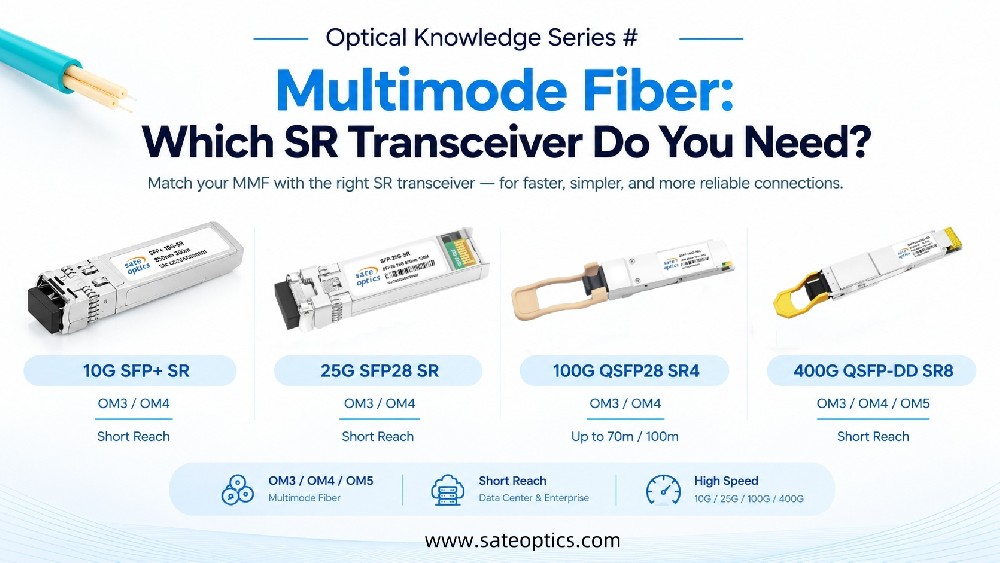
🚀 3. QSFP-DD (400G)
Speed: 8 x 50G = 400Gbps
Encoding: PAM4
DD = Double Density – adds a second row of electrical contacts
Backwards Compatible: Can support QSFP28/56 modules in certain systems
Ideal for hyperscale data centers needing massive bandwidth
🔑 Key Differences at a Glance:
| Feature | QSFP28 | QSFP56 | QSFP-DD |
|---|---|---|---|
| Max Speed | 100Gbps | 200Gbps | 400Gbps |
| Modulation | NRZ | PAM4 | PAM4 |
| Lanes | 4 x 25G | 4 x 50G | 8 x 50G |
| Backward Compatible | – | Partial | Yes |
| Density | Standard | Standard | Double Density |
💡 Conclusion
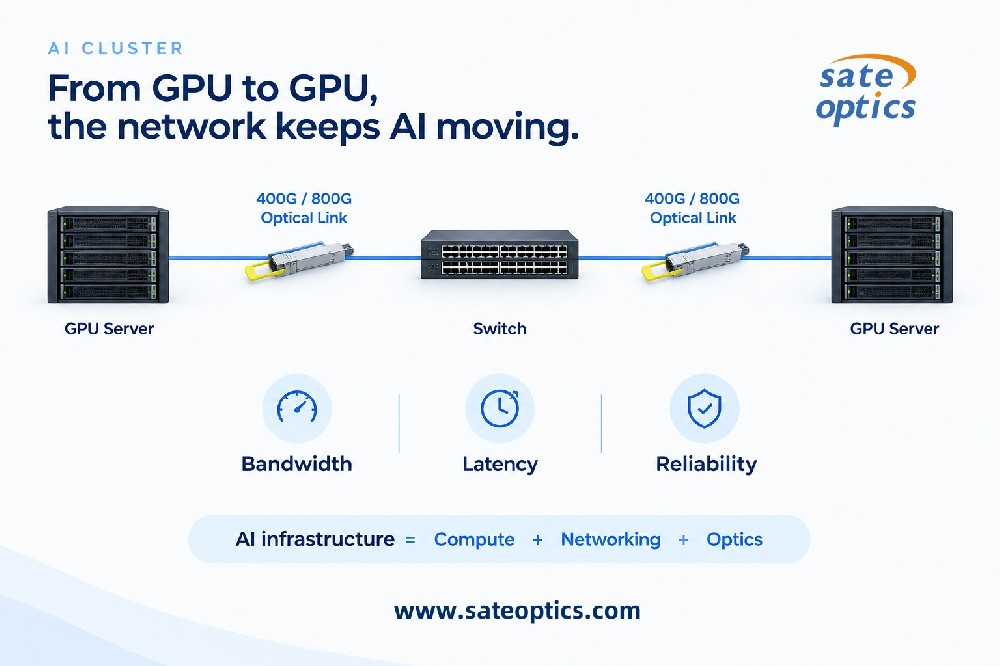
QSFP-DD enables a massive leap in data throughput without increasing the physical size of the transceiver. It’s the go-to for future-proofing networks and meeting the bandwidth needs of cloud, AI, and big data.
#SateOptics #QSFPDD #QSFP28 #QSFP56 #DataCenter #400G #NetworkSolutions #FiberOptic #HighSpeedNetworking #OpticalTransceivers #TechExplained #ConnectivityMatters
Email: Sales@sateoptics.com