
400G QSFP-DD FR4 VS FR8: What Is the Difference?
2023-08-15 21:06:53
400G QSFP-DD FR4 VS FR8: What Is the Difference?
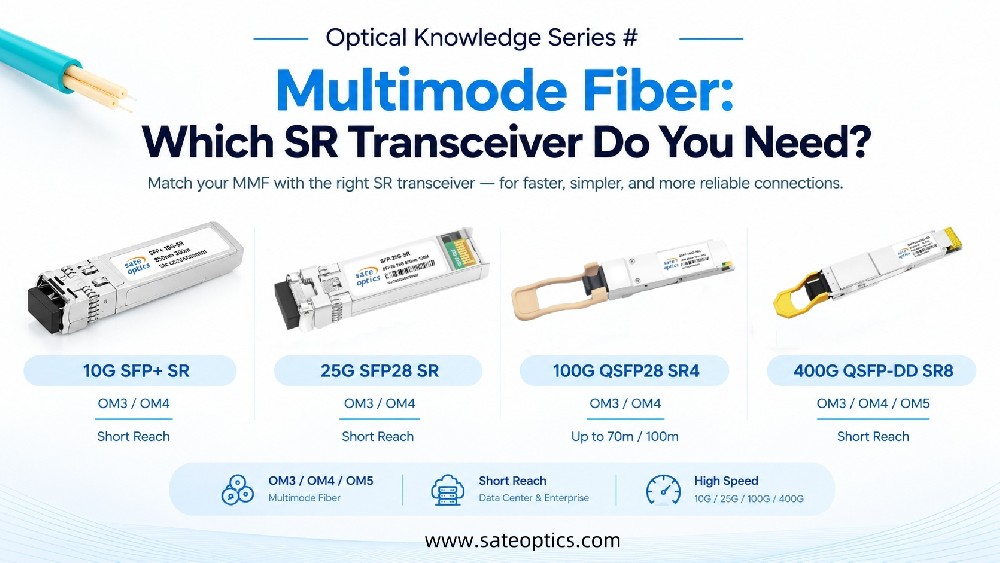
With the rapid expansion of cloud computing, AI, and big data, 400G optical transceivers are becoming the new standard for high-speed connectivity. Two popular options under the 400G QSFP-DD form factor are FR4 and FR8. So, what’s the difference?
📌 QSFP-DD FR4
"FR4" stands for Four Wavelengths (4 λ)
Data Rate: 4 x 100G PAM4 = 400Gbps
Reach: 2 km over single-mode fiber
Connector: LC Duplex
Optical Modulation: PAM4
Applications: Ideal for short-to-mid range 400G Ethernet links in data centers
📌 QSFP-DD FR8
"FR8" stands for Eight Wavelengths (8 λ)
Data Rate: 8 x 50G PAM4 = 400Gbps
Reach: 2 km over single-mode fiber
Connector: LC Duplex
Optical Modulation: PAM4
Applications: Typically used in systems designed for 8-wavelength architecture or legacy 50G PAM4 channels
🔍 FR4 vs FR8 – Key Differences
| Feature | QSFP-DD FR4 | QSFP-DD FR8 |
|---|---|---|
| Wavelengths | 4 x 100G PAM4 | 8 x 50G PAM4 |
| Modulation | PAM4 | PAM4 |
| Fiber Type | Single-mode (SMF) | Single-mode (SMF) |
| Reach | 2 km | 2 km |
| Connector | LC Duplex | LC Duplex |
| Complexity | Lower (4 λ) | Higher (8 λ) |
| Power Consumption | Lower | Slightly Higher |
💡 Which Should You Choose?
FR4 is more commonly used today thanks to its lower complexity, better power efficiency, and compatibility with newer 100G lanes.
FR8 may still be seen in legacy systems or specific network designs where 50G PAM4 lanes are required.
In short:
FR4 = Fewer wavelengths, more efficient
FR8 = More wavelengths, legacy-compatible
#SateOptics #400G #QSFPDD #FR4 #FR8 #OpticalTransceivers #DataCenter #FiberOptics #HighSpeedNetworking #TechExplained #ConnectivitySolutions #NetworkInnovation