
How to Reduce Optical Module Costs | SFP & QSFP Cost Optimization Guide
2026-04-22 22:15:31
How to Reduce Optical Module Costs Without Sacrificing Performance
In today’s rapidly evolving network environments, reducing operational costs is a top priority for data centers, telecom operators, and system integrators.
However, when it comes to optical transceivers, cutting costs blindly can lead to compatibility issues, link failures, and unexpected downtime.
So the real question is:
👉 How can you reduce optical module costs while maintaining reliability and performance?
This guide breaks down practical, field-proven strategies.
1. Avoid Over-Specification in Optical Modules
One of the most common cost drivers is using higher-spec modules than necessary.
For example:
Deploying 10km LR modules for links under 300 meters
Using long-reach optics in short-distance data center environments
Why this matters:
Higher-reach modules:
Use more complex laser components
Have stricter manufacturing requirements
Cost significantly more
Optimization tip:
✔ Match module type to actual transmission distance
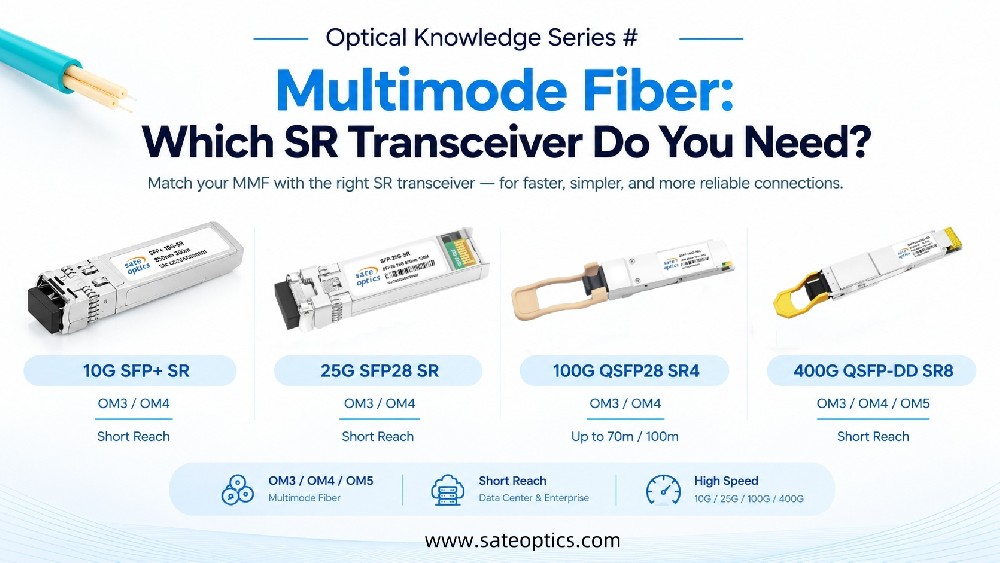
✔ Use SR modules for short-range connections
2. Consider Compatible Optical Transceivers
OEM-branded modules are widely used, but they often come with a premium price.
Today, high-quality compatible (third-party) optical modules offer:
Full compatibility with major brands
Reliable performance under strict testing
Significant cost savings (often 30–70%)
Key consideration:
Not all compatible modules are equal.
✔ Choose suppliers with:
Compatibility testing systems
Quality control processes
Proven industry experience
3. Standardize Your Optical Module Inventory
Managing too many module types increases both capital expenditure (CapEx) and operational complexity.
Common issues:
Excess stock of rarely used modules
Increased risk of wrong deployment
Difficult spare part management
Best practice:
✔ Focus on high-usage models
✔ Reduce SKU variety
✔ Build a standardized inventory strategy
This approach helps reduce procurement costs and simplifies operations.
4. Use DAC and AOC for Short-Distance Links
Not every connection requires a traditional optical transceiver.
For short distances (within racks or between adjacent racks):
Alternatives:
DAC (Direct Attach Cable) → lowest cost option
AOC (Active Optical Cable) → longer reach with flexibility
Benefits:
✔ Lower cost compared to optical modules
✔ Lower power consumption
✔ Plug-and-play simplicity
5. Focus on Total Cost of Ownership (TCO)
The lowest unit price does not always mean the lowest overall cost.
Hidden costs to consider:
Compatibility failures
Network downtime
Replacement and maintenance costs
Smart strategy:
✔ Evaluate supplier reliability
✔ Ensure stable long-term performance
✔ Prioritize consistent quality over lowest price
6. Work with the Right Optical Module Supplier
A reliable supplier can significantly reduce both risk and cost.
What to look for:
Multi-brand compatibility support
Fast delivery and stable supply
Technical support and troubleshooting assistance
A strong partner helps you avoid costly mistakes and improves overall network efficiency.
Conclusion: Cost Reduction Is About Optimization, Not Compromise
Reducing optical module costs is not about choosing the cheapest option.
It’s about:
Making the right technical decisions
Using appropriate products for each scenario
Working with reliable partners
👉 When done correctly, you can achieve lower costs, higher reliability, and better network performance at the same time.
optical transceiver cost
reduce optical module cost
compatible optical transceivers
SFP QSFP cost optimization
data center cost reduction
fiber optic transceiver pricing
DAC vs AOC vs optical module
Previous:CWDM or DWDM: Which One Should You Choose for Your Network?
Next:1G to 800G Network Upgrade Guide 2026 | Data Center & Enterprise Upgrade Strategy