
1G to 800G Network Upgrade Guide 2026 | Data Center & Enterprise Upgrade Strategy
2026-04-24 20:54:39
1G to 800G Network Upgrade Guide (2026): Best Upgrade Path for Data Centers & Enterprises
Upgrading from 1G to 800G is no longer just a trend — it’s a necessity for modern networks.
With the rapid growth of cloud computing, AI workloads, and high-bandwidth applications, organizations must rethink how they scale their infrastructure. However, choosing the wrong upgrade path can lead to unnecessary costs and performance limitations.
In this guide, we explain how to upgrade from 1G to 800G step by step, including the most cost-effective strategies, key technologies, and common mistakes to avoid.
What Is the Best Network Upgrade Path from 1G to 800G?
The best upgrade path depends on your environment, but most networks follow this progression:
1G → 10G (entry-level upgrade)
10G → 25G (cost-efficient scaling)
25G → 100G (modern data center standard)
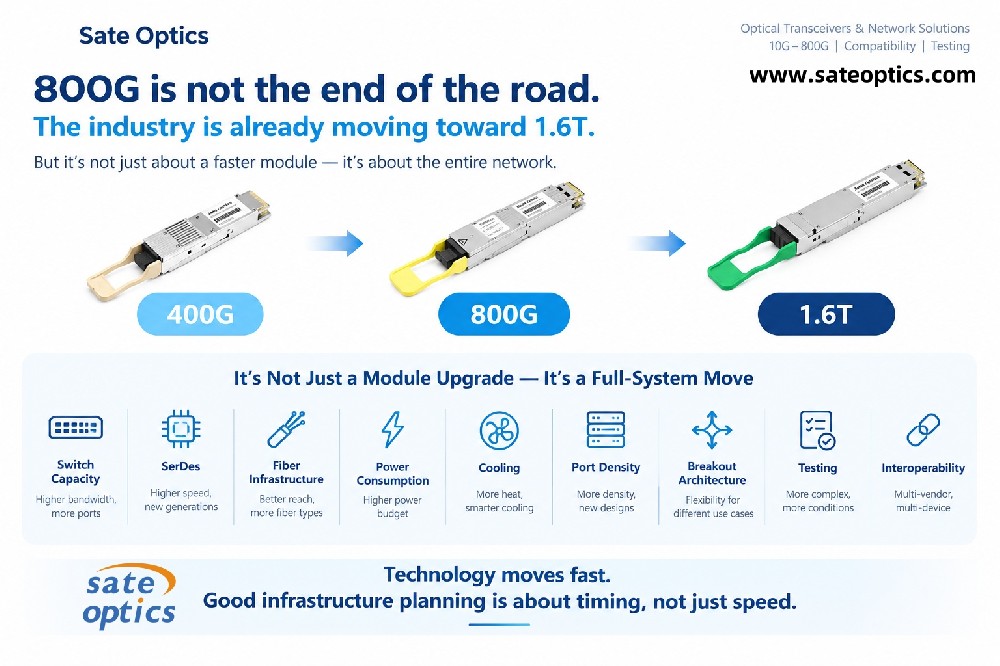
100G → 400G (high-performance scaling)
400G → 800G (next-generation infrastructure)
Not every organization needs to jump directly to 400G or 800G. The key is to align your upgrade with actual business demand.
Why Are Networks Moving from 1G to 100G and Beyond?
Several major trends are accelerating network upgrades:
Cloud computing and virtualization
AI and machine learning traffic growth
High-definition video and streaming
Increasing east-west traffic in data centers
As a result, traditional 1G and even 10G networks are becoming bottlenecks.
Today, 100G is widely considered the new baseline for modern data centers, while 400G and 800G are rapidly emerging.
Step-by-Step Network Upgrade Explained
1G to 10G Upgrade
This is the most common and cost-effective first step.
Key benefits:
Immediate bandwidth improvement
Minimal infrastructure changes
Easy deployment using SFP+ modules
Best for:
Small to mid-sized enterprise networks
10G to 25G Upgrade
25G offers better efficiency than 40G and is becoming the preferred choice.
Advantages:
Lower cost per bit
Higher performance for servers
Same form factor (SFP28)
Many organizations skip 40G and move directly to 25G.
25G to 100G Upgrade
This is the standard for modern data center networks.
Key features:
High-capacity backbone
Breakout capability (100G to 4×25G)
Ideal for spine-leaf architecture
100G provides the balance between performance, cost, and scalability.
100G to 400G Upgrade
Designed for large-scale environments.
Use cases:
Data center interconnect (DCI)
Hyperscale cloud networks
High-performance computing (HPC)
400G improves port density and power efficiency.
400G to 800G Upgrade
The latest generation of high-speed networking.
Applications:
AI clusters
Ultra-large data centers
Next-generation switching
800G is still in early adoption but rapidly growing.
How to Choose the Right Network Upgrade Strategy
Before upgrading, consider these key factors:
1. Current network bottlenecks
Identify whether limitations come from bandwidth, latency, or hardware.
2. Budget and ROI
Balance short-term costs with long-term scalability.
3. Hardware compatibility
Check switch ports, transceiver types, and power requirements.
4. Future growth planning
Plan for 3–5 years to avoid repeated upgrades.
A well-planned strategy reduces both cost and risk.
Common Network Upgrade Mistakes to Avoid
Avoid these frequent issues:
Skipping compatibility checks between vendors
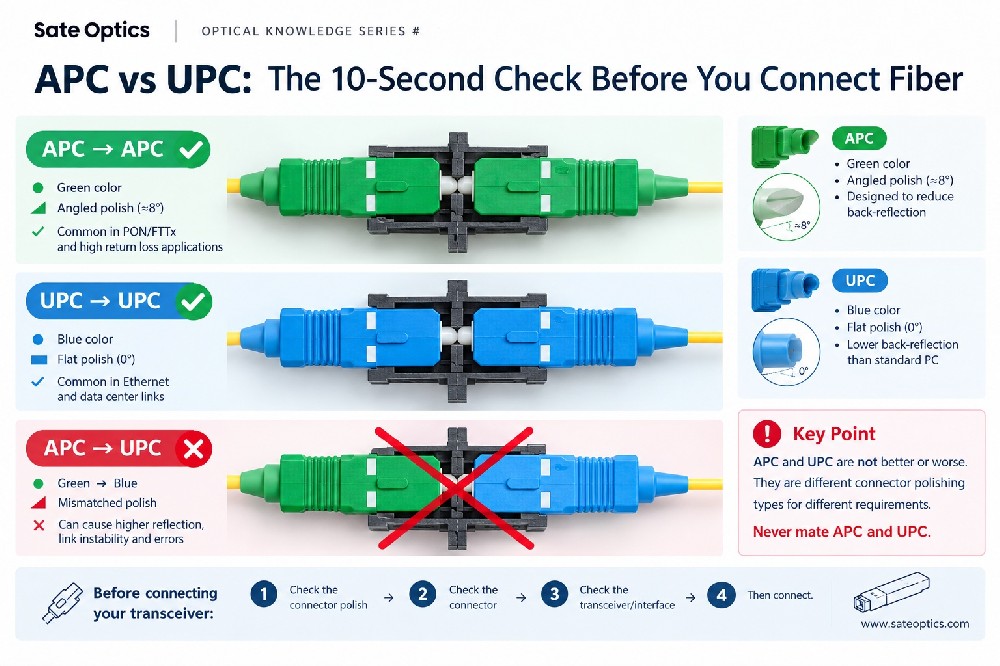
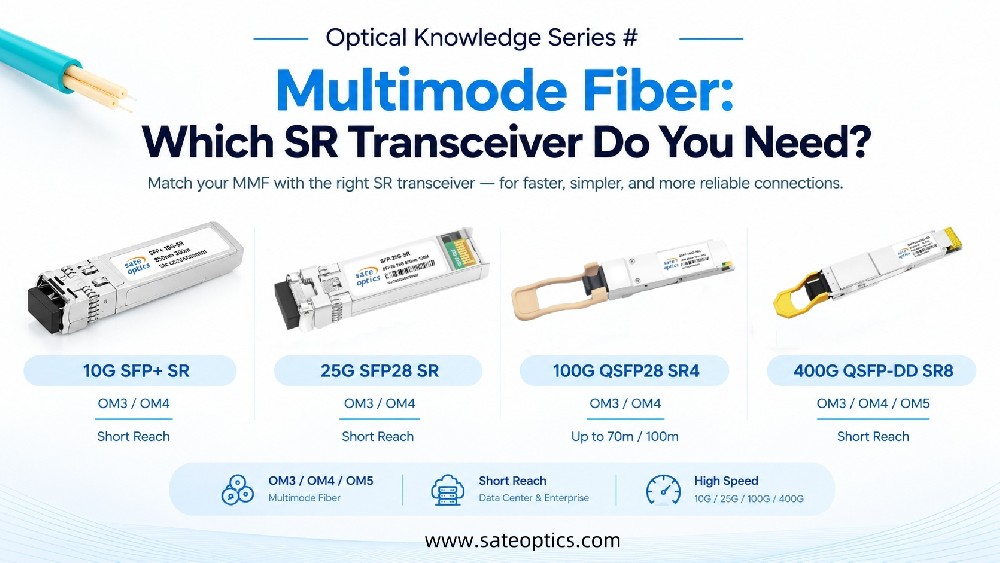
Using mismatched optical transceivers (SR, LR, ER)
Over-investing in high-speed solutions too early
Ignoring fiber type (OM3, OM4, OS2)
Underestimating power and cooling requirements
These mistakes can lead to deployment failures or unnecessary costs.
Recommended Upgrade Paths by Use Case
Enterprise Networks
1G → 10G → 25G
Focus on affordability and gradual upgrades
Data Centers
10G → 25G → 100G
Optimized for scalability and performance
AI & Cloud Infrastructure
100G → 400G → 800G
Designed for high density and ultra-low latency
FAQs: 1G to 800G Network Upgrade
Is 25G better than 40G?
Yes. 25G provides better cost efficiency, lower power consumption, and higher performance per lane, which is why many data centers skip 40G entirely.
Is 100G the new standard?
Yes. 100G is now widely considered the standard for modern data center backbone networks.
Should I upgrade directly to 400G?
Not always. 400G is best suited for hyperscale and high-performance environments. Most enterprises should move gradually through 25G or 100G.
When should I consider 800G?
800G is ideal for AI clusters and next-generation data centers, but may not yet be necessary for typical enterprise deployments.
What is the biggest mistake in network upgrades?
The biggest mistake is upgrading without a long-term plan, leading to repeated investments and compatibility issues.
Final Thoughts
The transition from 1G to 800G is not just about speed — it’s about building a network that scales efficiently.
Instead of chasing the highest bandwidth, focus on:
Practical upgrade paths
Cost-effective solutions
Long-term scalability
A smart upgrade strategy ensures your network is ready for both current and future demands.
1G to 800G network upgrade guide
data center network upgrade strategy
10G vs 25G vs 100G vs 400G vs 800G
enterprise network upgrade path
optical transceiver upgrade guide
QSFP28 QSFP-DD 400G 800G
Previous:How to Reduce Optical Module Costs | SFP & QSFP Cost Optimization Guide
Next:Too Many Optics Brands in One Rack? Why Data Centers Standardize Suppliers