
Fiber Optic Tip: What's the more Common SFP Problems - Low RX power or Overly Strong TX? 🔌💡
2025-09-05 11:31:28
Fiber Optic Tip: What's the more Common SFP Problems - Low RX power or Overly Strong TX? 🔌💡
When working with SFP transceivers, two issues often come up:
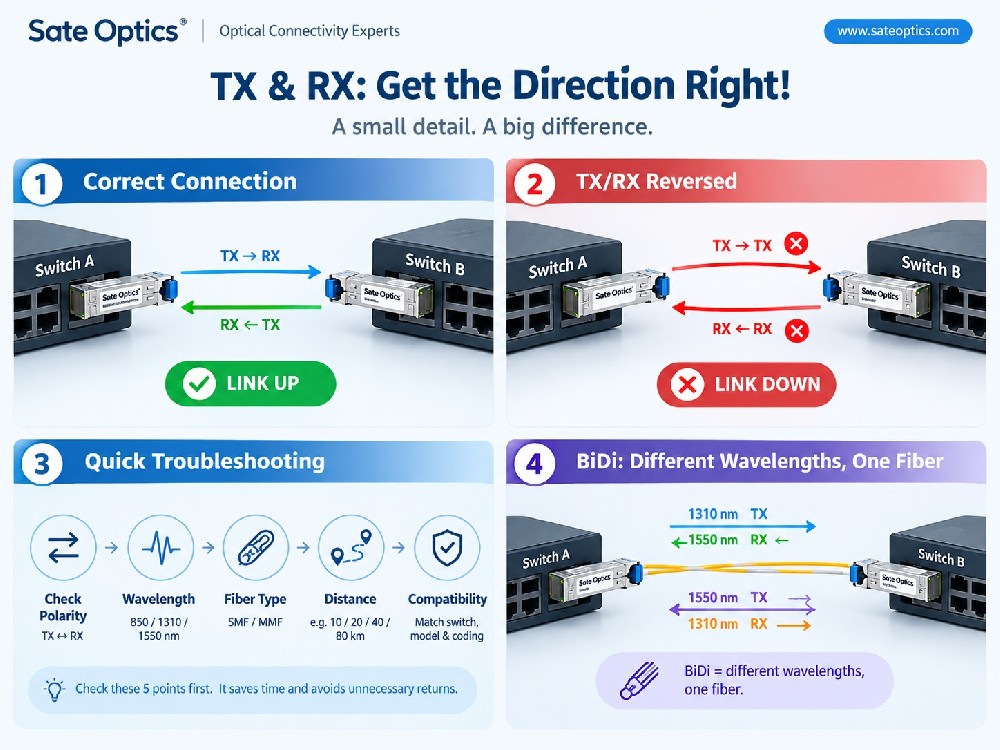
1️⃣ Low RX Power – Usually caused by dirty connectors, long distances, fiber bends, or link loss. It leads to weak signal reception and unstable connections.
♾️ Causes: Dirty connectors (#1 culprit!), fiber bends, faulty transmitters, too long distances.
♾️ Symptoms: Link flaps, CRC errors, total link loss.
♾️ Fix: Clean your connectors!
2️⃣ Overly Strong TX Power – Less common, but it can still cause problems. A transmitter that is too strong can saturate the receiver and create bit errors.
♾️ Causes: Using long-haul optics (e.g., 80km ZX) on short fiber runs.
♾️ Symptoms: Can be deceptive! Link may be up but with a high bit error rate, leading to receiver damage.
♾️ Fix: Use an optical attenuator.
👉 In practice, Low RX Power is far more common. That’s why routine inspection, cleaning, and proper link budget design are key to maintaining reliable network performance.
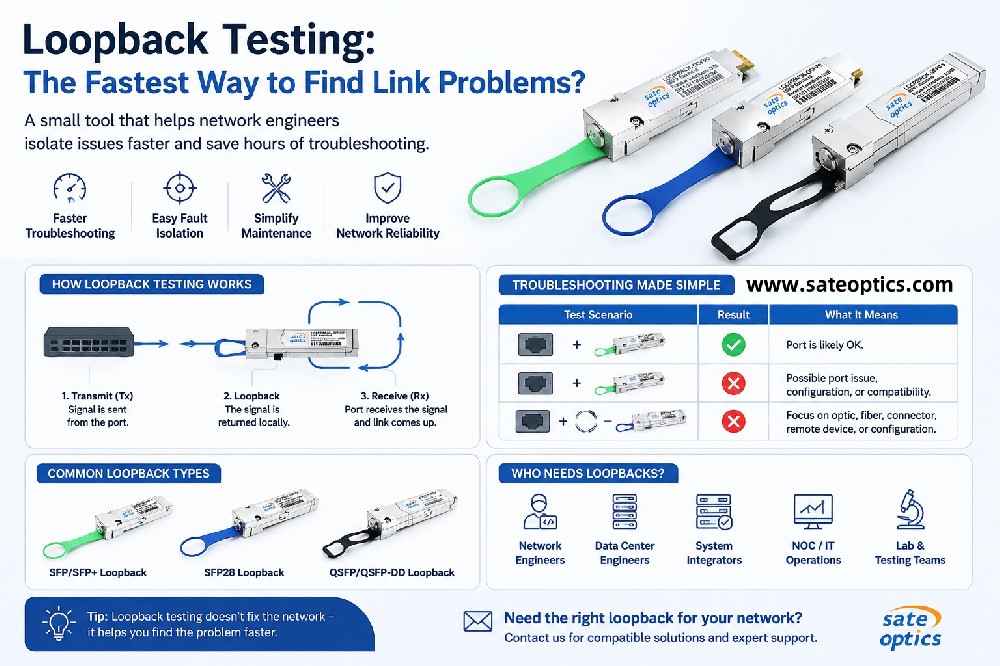
💥 The Lesson: Always check your DOM (Digital Optical Monitoring) readings! Monitor both TX and RX power during turn-up to prevent downtime and avoid costly hardware replacement.
💭 Question for you: Which issue have you faced more often in your projects – Low RX Power or Strong TX?
Let’s share experiences below! ⬇️
sales@sateoptics.com
#FiberOptics #Networking #SFP #Telecom #DataCenter #OpticalNetworking #Connectivity #TechTips
Next:🚀 Sate Optics Launches Next-Generation 1.6T OSFP-XD DR8 Optical Transceiver