
🔌 What is an SFP in Data Centers? A Clear Guide for Modern Network Teams
2025-11-18 15:52:52
🔌 What is an SFP in Data Centers? A Clear Guide for Modern Network Teams
As data centers scale to support cloud computing, AI workloads, and massive traffic growth, one component quietly keeps everything connected:
The SFP — Small Form-factor Pluggable transceiver.
But what exactly does an SFP do, and why is it critical for every modern data center?
📘 What is an SFP?
An SFP is a compact, hot-swappable optical (or copper) transceiver installed in switches, servers, and network equipment.
It converts electrical signals into optical signals — enabling high-speed data transmission between racks, rows, and even across sites.
In short, the SFP is the “bridge” that makes physical connectivity possible in the network.
🔥 Why SFPs Matter in Today’s Data Centers
1️⃣ Flexibility for Any Network Design
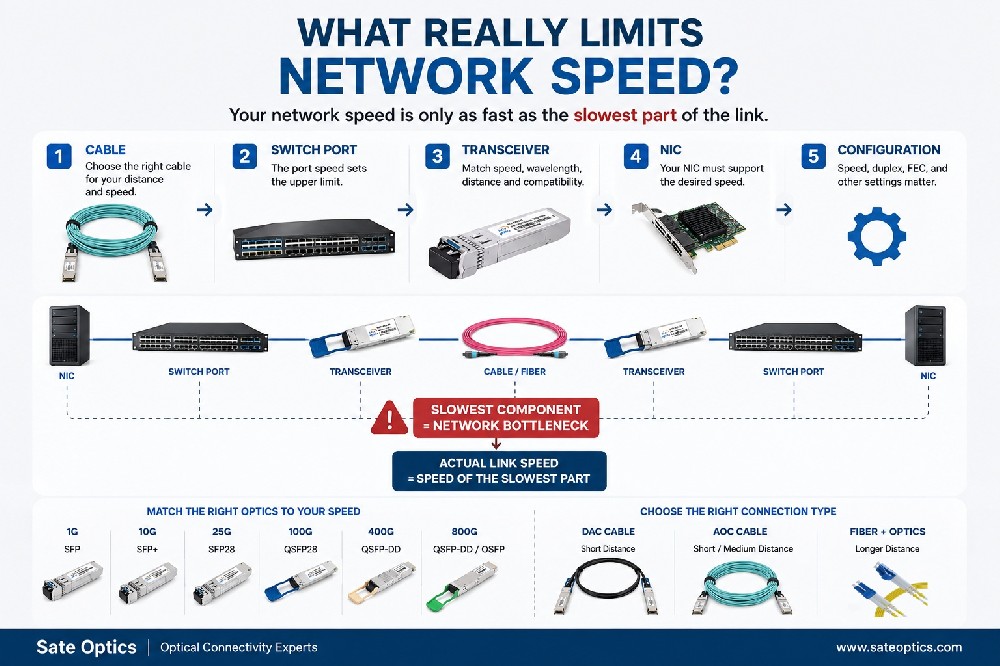
Data centers evolve fast — migrations from 1G → 10G → 25G → 100G are common.
SFPs allow teams to upgrade port by port instead of replacing entire switches.
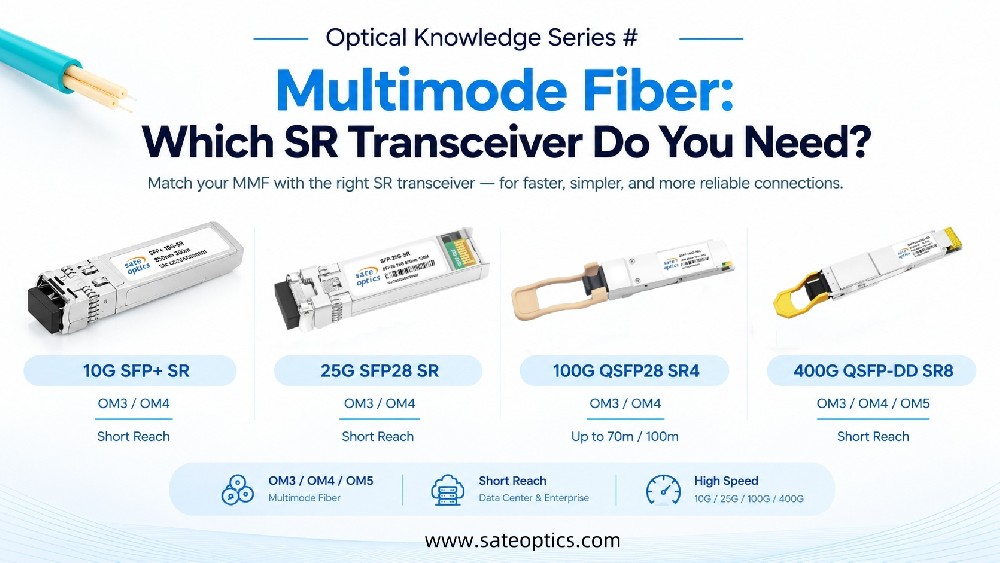
✔ Supports multiple speeds: 1G SFP / 10G SFP+ / 25G SFP28 / 40G QSFP+ / 100G QSFP28 / 400G QSFP-DD / 800G OSFP
✔ Fiber or copper options
✔ Multi-vendor compatibility available
2️⃣ Reduced Cost Without Sacrificing Performance
One major pain point in the industry:
OEM transceiver prices are extremely high — sometimes 3–10× the cost.
High-quality compatible SFPs provide:
✔ OEM-level performance
✔ Full interoperability
✔ Massive cost savings
✔ Fast delivery when OEM lead times are long
This is especially critical for data centers operating at scale.
3️⃣ Hot-Swappable = Zero Downtime
Data centers cannot afford outages.
SFPs can be replaced or upgraded without shutting down equipment, keeping uptime stable and SLA-compliant.
4️⃣ Long-Distance & High-Bandwidth Capability
Depending on the transceiver type:
✔ Short-reach (SR)
✔ Long-reach (LR)
✔ CWDM / DWDM
✔ BiDi solutions
✔ DAC / AOC connectivity
This ensures flexible deployments from top-of-rack to campus-wide connections.
⚡ Common Pain Points SFPs Solve
🔹 Fiber exhaustion → Use CWDM/DWDM SFPs
🔹 High OEM pricing → Use compatible modules
🔹 Inventory gaps & long lead times → 24–48h availability
🔹 Bandwidth upgrades → Migrate port-by-port
🔹 Heat & power challenges → Low-power SFP designs available
🔍 Choosing the Right SFP: Key Considerations
Before deploying, check:
Required speed (1G / 10G / 25G / 100G…)
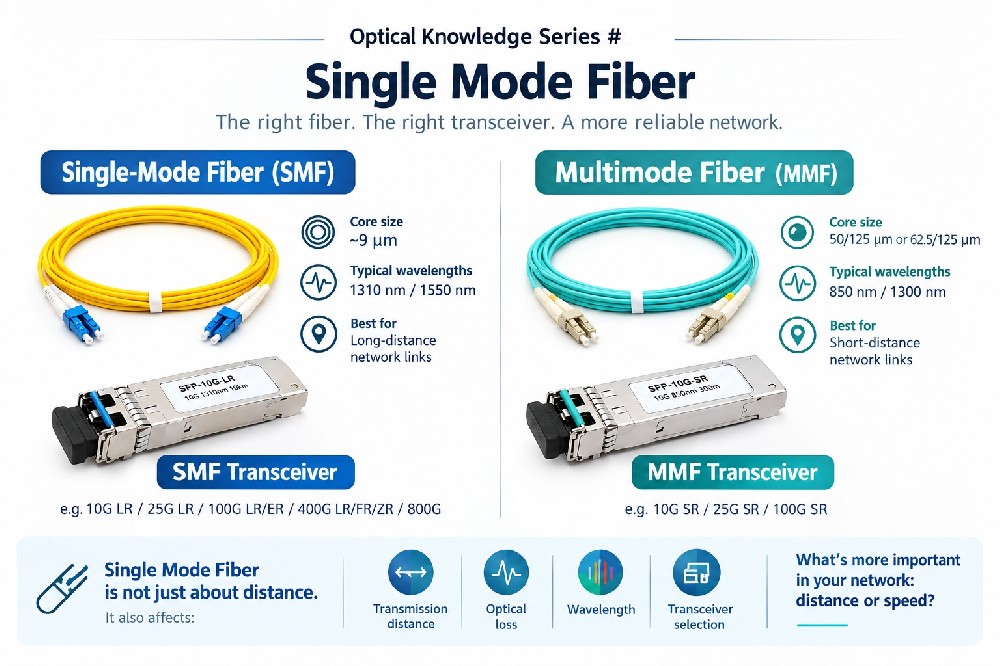
Distance & fiber type (MMF / SMF)
Switch brand coding requirements
Application: TOR, aggregation, storage, cloud fabric, etc.
A correct match ensures optimal performance and zero compatibility issues.
💬 Final Thoughts
SFPs may be small, but they power the entire data center network.
By choosing the right transceiver — and optimizing cost, performance, and scalability — companies can significantly improve operational efficiency.
👉 What SFP speed is your data center currently using — 10G, 25G, or already moving toward 100G/400G?
Share your experience below!
#DataCenter #SFP #OpticalTransceiver #Networking #CloudInfrastructure #Connectivity #SFPPlus #QSFP #DataCenterSolutions #ScalableNetworking #FiberOptics
Previous:Understanding the Difference Between CFP, CFP2, CFP4, and CFP8 Optical Transceivers
Next:Routing vs Switching vs Firewall: Key Technical Differences in Modern Network Architecture