
⚡ 100G Transceiver Modules in FTTH Networks — The Key to High-Capacity Aggregation
2025-11-06 16:23:01
⚡ 100G Transceiver Modules in FTTH Networks — The Key to High-Capacity Aggregation
As FTTH (Fiber to the Home) continues to scale, service providers must handle massive traffic from cloud services, 4K/8K streaming, gaming, IoT, and 5G.
That’s where 100G optical transceiver modules play a crucial role. 🚀
Unlike home ONTs using GPON/10G-PON, 100G modules work in the aggregation & backbone layer to keep the entire FTTH network fast and reliable.
🔹 Where 100G is Used in FTTH?
✅ OLT uplink to backbone
✅ Aggregation network between central offices
✅ Metro network connections
✅ Backbone to data center interconnects
Homes don’t directly use 100G modules — but their performance depends on them!
🔹 Why 100G matters in FTTH?
✅ High capacity: Handles thousands of FTTH subscribers
✅ Cost-efficient upgrade: Easy scaling without changing fiber
✅ Modular: Plug-and-play QSFP28
✅ Supports multi-service traffic: Internet, VoIP, IPTV, Cloud, 5G backhaul
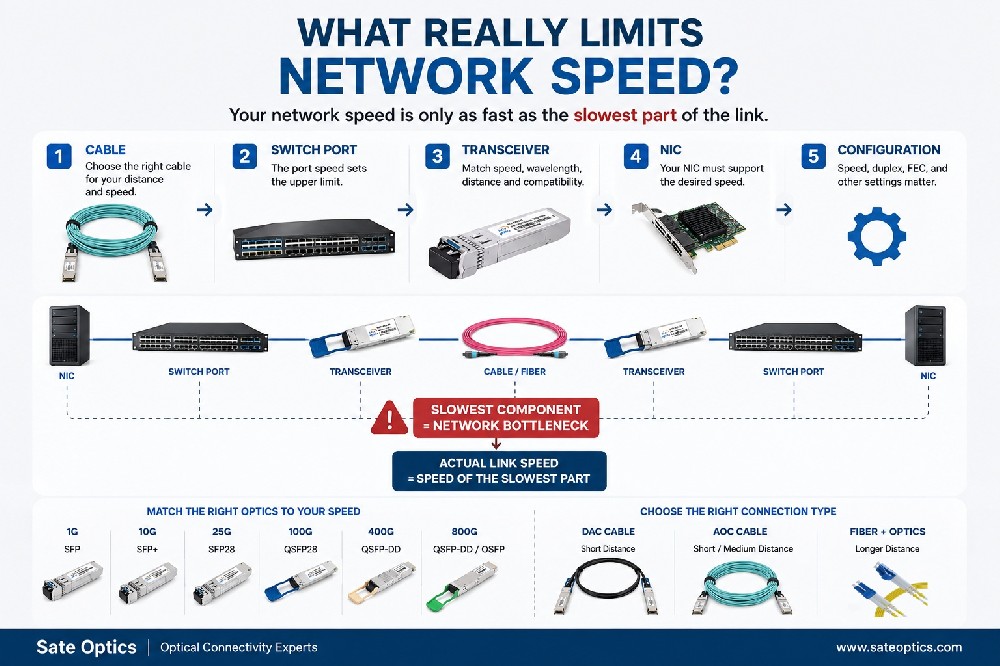
🔹 Common 100G Form Factors
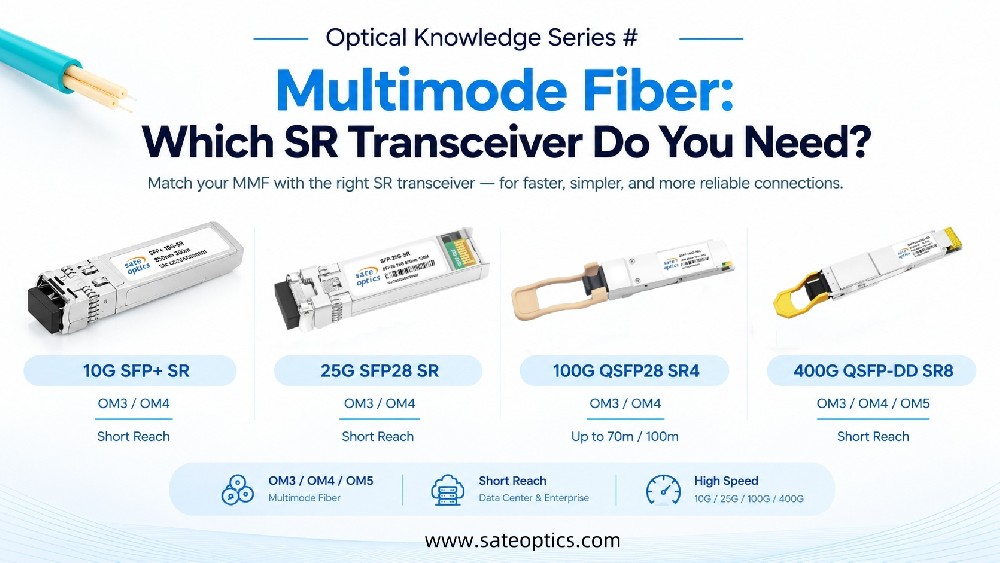
✅ QSFP28 – Most used
Popular variants:
100G-SR4 (MMF, short distance)
100G-LR4 (10 km)
100G-ER4 (40 km)
100G-ZR4 (80 km+)
✨ In Short
100G transceivers don’t go to the home —
but they form the high-capacity backbone layer that makes multi-gig FTTH services possible.
📦 We supply 100G QSFP28 modules — compatible, reliable, fast delivery.
Ideal for FTTH, Metro, Data Center, & Telecom networks.
👉 Are you deploying 100G already, or still on 25G/40G? Comment below!
#FTTH #100G #QSFP28 #OpticalTransceiver #FiberOptics #DataCenter #MetroNetwork #Telecom #WDM #SateOptics
Previous:⚡ 400G Optical Modules in FTTH Networks – Future-Proofing Connectivity
Next:Understanding the Difference Between CFP, CFP2, CFP4, and CFP8 Optical Transceivers