
⚡ 400G Optical Modules in FTTH Networks – Future-Proofing Connectivity
2025-10-29 17:10:49
⚡ 400G Optical Modules in FTTH Networks – Future-Proofing Connectivity
FTTH (Fiber to the Home) is no longer just about residential broadband — it’s evolving to support cloud services, 5G backhaul, smart cities, and enterprise connectivity.
That’s where 400G optical modules come into play. 🚀
🔹 Why 400G in FTTH?
Massive Bandwidth: Supports huge data growth from streaming, gaming, cloud & AI applications.
Aggregation Power: 400G modules connect OLT to core/backbone networks, aggregating thousands of homes.
Scalability: A single 400G uplink can handle traffic that used to require multiple 100G links.
Low Latency: Critical for 5G and real-time applications.
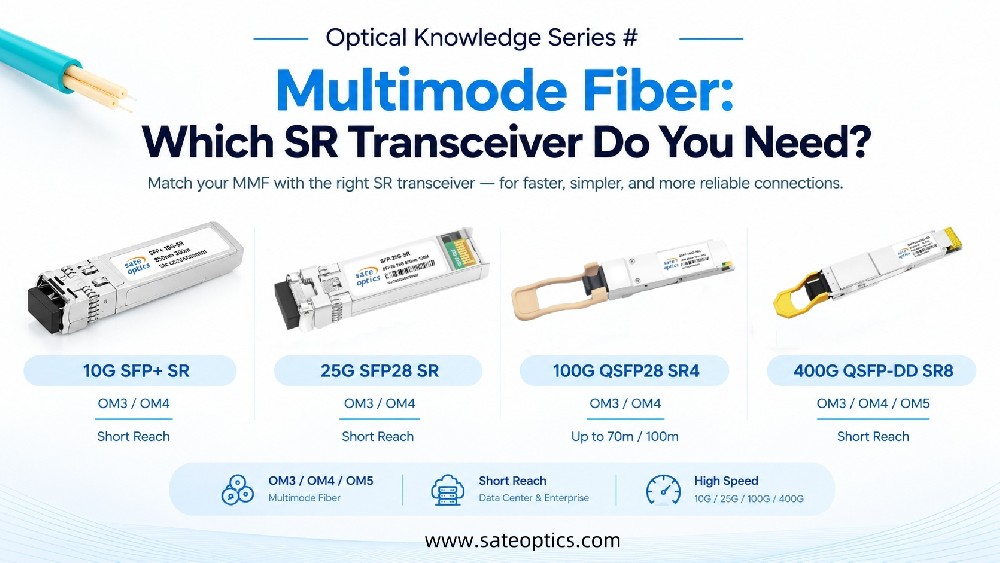
🔹 Common Form Factors:
✅ QSFP-DD
✅ OSFP
✅ CFP8
🔹 Impact on FTTH Operators:
Reduce fiber count and simplify network design
Lower cost per bit as bandwidth demand grows
Enable smooth transition to Next-Gen FTTH & 5G convergence
💡 Pro Tip: While homes don’t directly use 400G modules, they’re the backbone that makes multi-gigabit FTTH services possible.
📦 Sate Optics provides 400G QSFP-DD & OSFP solutions designed for data centers, telecoms, and FTTH aggregation layers. Ready for large-scale deployments.
👉 Do you think residential users will soon need 10G+ FTTH at home? Share your thoughts below!
#400G #FTTH #OpticalModules #QSFPDD #OSFP #FiberOptics #DataCenter #Telecom #NextGenNetworking #SateOptics
Previous:🔌 𝐃𝐢𝐟𝐟𝐞𝐫𝐞𝐧𝐭 𝐓𝐲𝐩𝐞𝐬 𝐨𝐟 𝐭𝐡𝐞 𝐋𝐚𝐭𝐞𝐬𝐭 𝐍𝐞𝐭𝐰𝐨𝐫𝐤 𝐒𝐰𝐢𝐭𝐜𝐡𝐞𝐬
Next:⚡ 100G Transceiver Modules in FTTH Networks — The Key to High-Capacity Aggregation