
🔍 How is SFP Working in FTTH Networks? 💡
2025-07-24 15:16:11
🔍 How is SFP Working in FTTH Networks?
💡 A Simple Guide for Fiber Enthusiasts & Network Engineers
SFP (Small Form-factor Pluggable) modules are the tiny but powerful heroes behind smooth FTTH (Fiber to the Home) connections.

Here’s how it works in your FTTH setup:
1️⃣ OLT Side (in the Data Center):
➤ SFP/GPON/EPON transceivers plug into the OLT port.
➤ Converts electrical signals to optical signals and sends them through fiber.
2️⃣ Fiber Distribution:
➤ Optical Splitters divide the signal for multiple homes.
➤ Passive — no power needed, cost-efficient.
3️⃣ ONT Side (at the Customer Premise):
➤ SFP transceiver receives the light signal in the ONT or ONU.
➤ Converts it back to electrical signals for your Wi-Fi/router.
✨ Why SFP is crucial?
✅ Hot-pluggable for easy upgrade/replacement
✅ Stable performance & long-distance transmission
✅ Compatible with multiple brands/devices
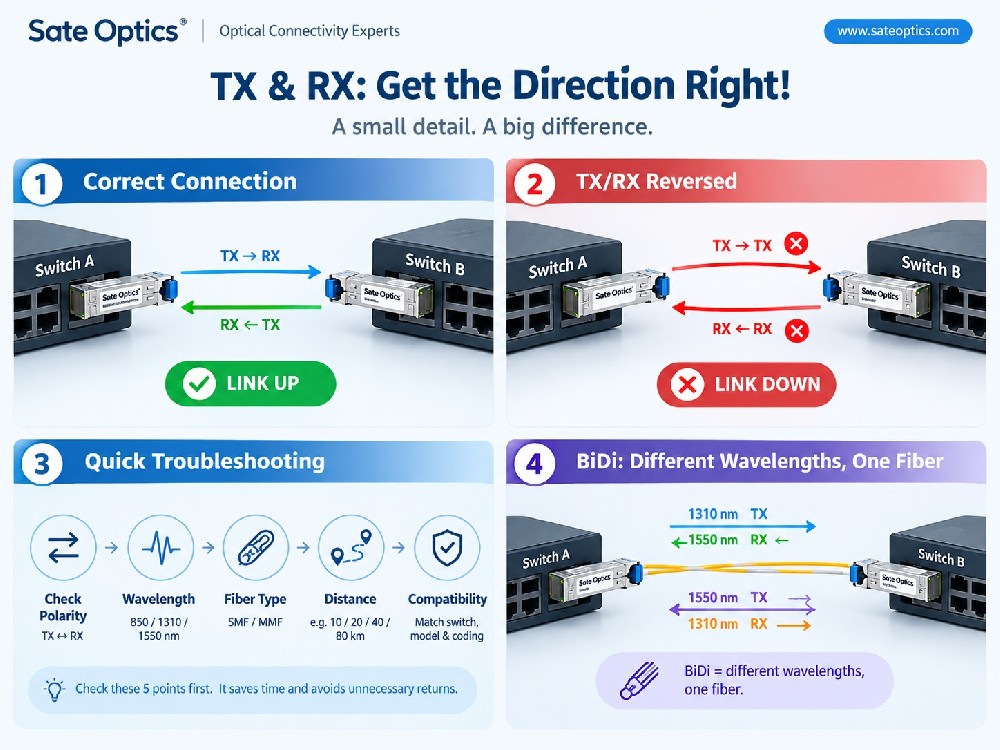
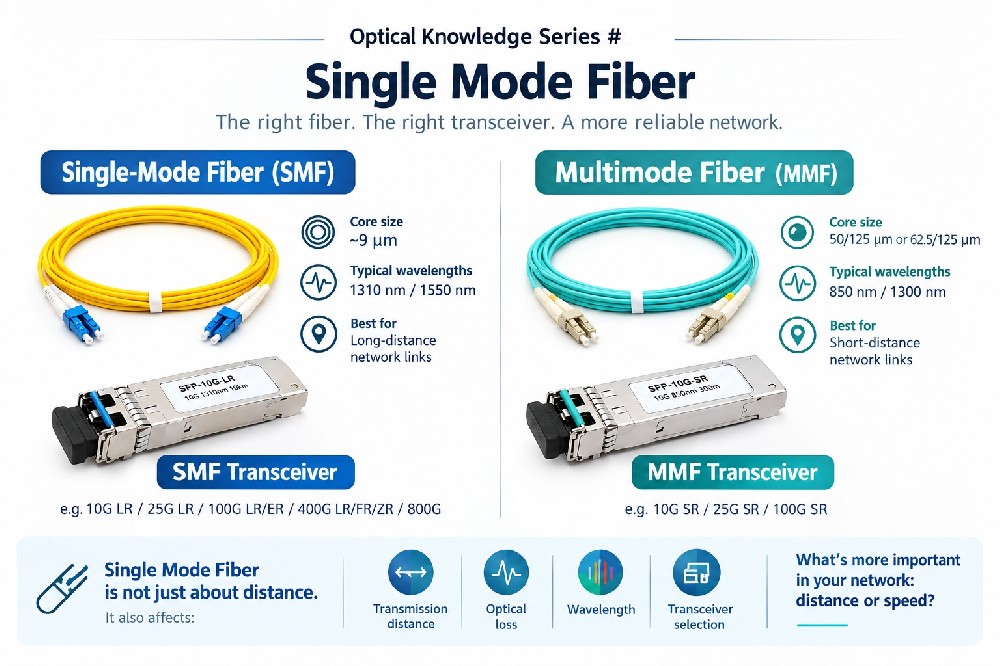
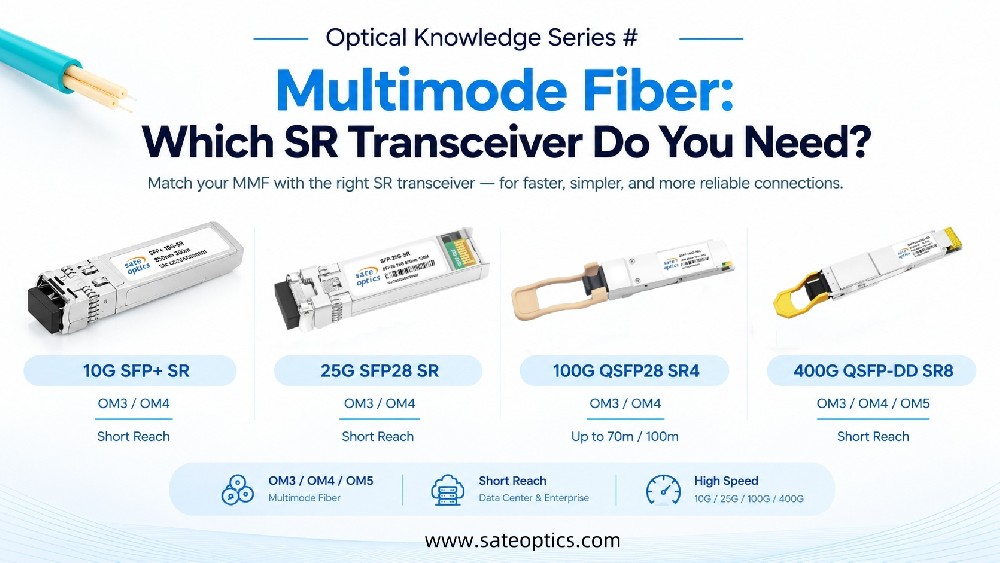
💬 Pro Tip: Always match the right SFP type (GPON, EPON, BiDi, etc.) with your system to ensure optimal performance!
📦 Need reliable SFP modules for your FTTH projects?
We provide fast delivery, OEM compatibility, and expert support.
👇 Drop your thoughts or questions at sales@sateoptics.com – let's connect and share insights!
#FTTH #SFP #FiberOptic #NetworkEngineering #GPON #EPON #FiberToTheHome #SateOptics #DataCenter #Telecom #PassiveNetwork #OpticalTransceiver #ISP #FiberDeployment #B2BNetworking #TechExplained
Previous:400G ZR & ZR+ - New Generation of Solutions for Longer-reach Optical Communications
Next:🚀 Understanding Transmission Distance: Short-Range vs Long-Range Optical Modules👇